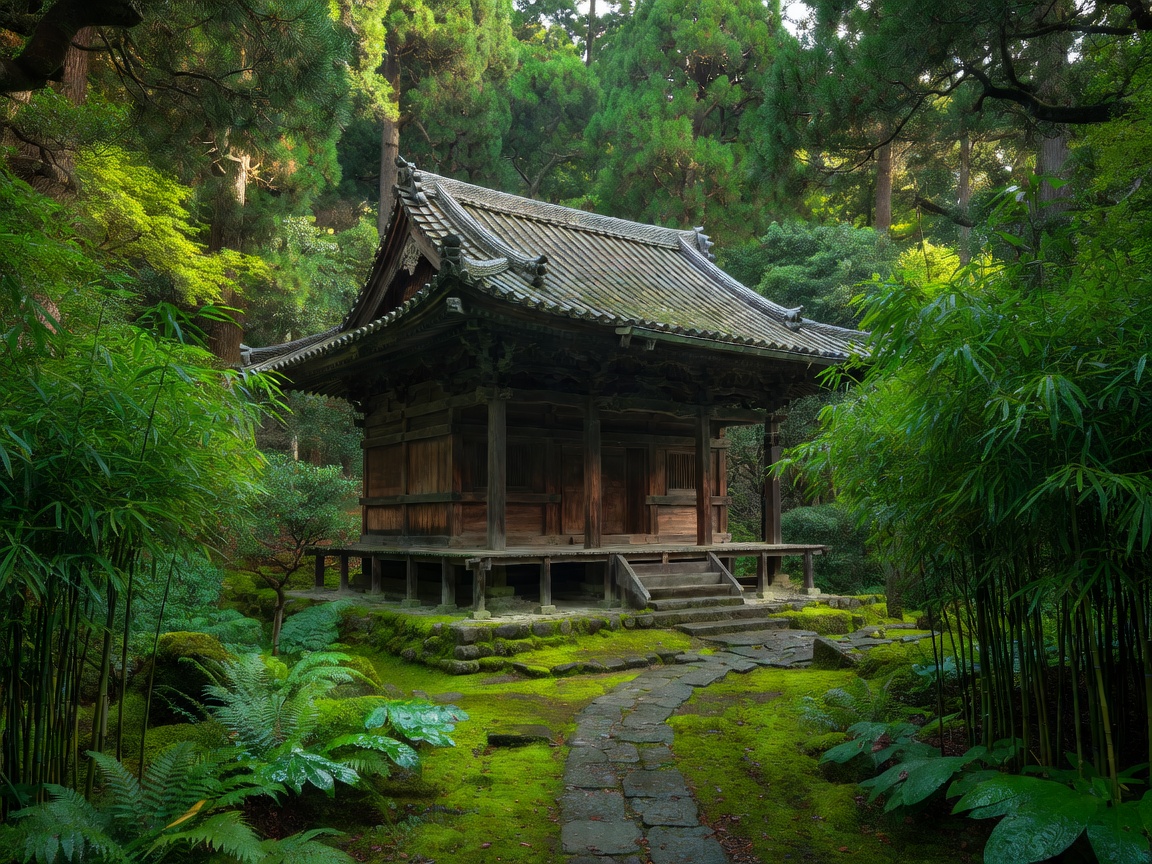
Kyoto is a city where time behaves differently. Serving as the imperial capital of Japan for over a millennium, it presents a delicate harmony of natural stillness, refined woodwork, and deeply embedded tea ritual traditions.
The Essence of Wabi-Sabi
Unlike Western capitals defined by soaring stone monuments, Kyoto's aesthetic strength lies in restraint. Weathered cedar wood, rake-marked gravel, and subtle moss carpets at Ryoan-ji and Kinkaku-ji exemplify *wabi-sabi*—the appreciation of natural imperfection and quiet transience.
Traditional Machiya Architecture
In historic districts like Gion and Ninenzaka, traditional *machiya* townhouses line narrow stone alleys. These timber-framed structures feature subtle wooden lattices (*koshi*) that balance privacy with natural ventilation, encapsulating centuries of refined urban living.
Seasonal Transitions
Whether enveloped in soft spring cherry blossoms (*sakura*) or the vibrant crimson maple foliage (*momiji*) of late autumn, Kyoto transforms each season into a visual masterpiece of quiet reverence.